

What is EMDR Therapy?

People often search for answers about “what is EMDR therapy” because they are tired of feeling stuck in painful memories, anxiety, or emotional stress that does not seem to go away. Some experiences stay with people for years. Even when life moves forward, certain memories can still bring fear, sadness, guilt, or panic.
EMDR therapy helps people process those difficult experiences in a healthier way. Many people also look into EMDR trauma therapy when searching for support after trauma, grief, anxiety, or overwhelming life events.
In this blog, we’ll explain what EMDR therapy is, how it works, what happens during sessions, and how it may support emotional healing and mental health.
What Is EMDR Therapy?
EMDR stands for Eye Movement Desensitization and Reprocessing. It is a type of therapy that helps people work through distressing memories and emotional pain in a safe and guided way.
In simple terms, EMDR therapy helps the brain process memories that may feel “stuck.” These are often experiences that still trigger strong emotions long after they happened.
The goal is not to erase the memory. The goal is to reduce the emotional distress connected to it so it feels less overwhelming in daily life.
Many people seek EMDR trauma therapy for experiences connected to:
Trauma and PTSD
Anxiety and panic attacks
Childhood experiences
Emotional triggers
Negative self-beliefs
Stress after difficult life events
EMDR therapy is often helpful for people who feel emotionally stuck or continue reacting strongly to past experiences even after time has passed.
How Does EMDR Work?
Our brains naturally process experiences and store memories over time. But stressful or traumatic events can interrupt that process. Instead of feeling like a memory, the experience may continue to feel emotionally present. This is why certain sounds, places, situations, or thoughts can trigger intense emotional reactions.
EMDR therapy helps the brain process those memories in a healthier way. During sessions, licensed therapists use bilateral stimulation, which may include guided eye movements, tapping, or sounds that move back and forth from side to side. This process helps reduce the emotional intensity tied to distressing memories.
The 8 Phases of EMDR Therapy
EMDR therapy follows a structured process that helps clients move through treatment safely and gradually.
Phase 1: History and Treatment Planning
Your therapist learns about your background, emotional struggles, and goals for therapy. Together, you identify memories or situations to focus on during treatment.
Phase 2: Preparation
You learn grounding tools, relaxation techniques, and coping skills to help you feel emotionally safe during sessions.
Phase 3: Assessment
You and your therapist identify a distressing memory along with the thoughts, emotions, and beliefs connected to it.
Phase 4-6: Desensitization, Reprocessing, and Installation
During these phases, bilateral stimulation is used while focusing on the memory. The goal is to reduce emotional distress and help replace painful beliefs with healthier ones.
Phase 7: Closure
Sessions end with calming exercises and grounding techniques to help you feel emotionally stable as you leave.
Phase 8: Reevaluation
At future sessions, you and your therapist review progress and discuss what still needs support.
What Can EMDR Help With?
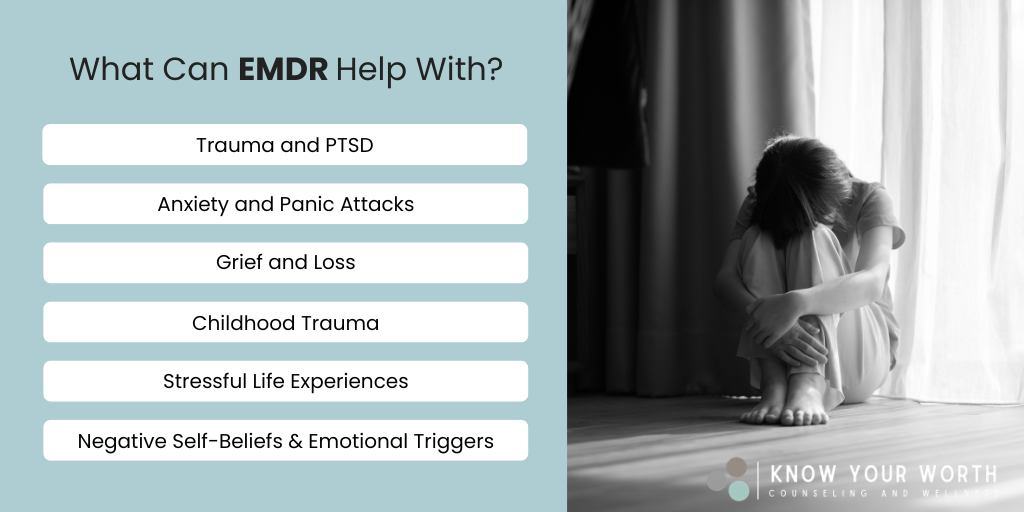
EMDR therapy supports people dealing with many different emotional and mental health struggles.
Trauma and PTSD
EMDR trauma therapy is widely used for people processing painful or traumatic experiences that continue affecting daily life.
Anxiety and Panic Attacks
Some people experience anxiety connected to past events or emotional triggers. EMDR therapy can help reduce the emotional response tied to those experiences.
Grief and Loss
Loss can leave people feeling emotionally overwhelmed for a long time. EMDR therapy may help process painful emotions connected to grief.
Childhood Trauma
Past childhood experiences can continue to affect relationships, confidence, and emotional health later in life.
Stressful Life Experiences
Difficult breakups, accidents, medical experiences, or major life changes can leave emotional stress behind.
Negative Self-Beliefs and Emotional Triggers
Many people carry thoughts like “I’m not safe” or “I’m not good enough.” EMDR therapy helps people process where those beliefs started and build healthier thought patterns over time.
Why Choose EMDR Therapy?
Some people choose EMDR therapy because they feel stuck after traditional talk therapy alone. Others want help processing emotional pain connected to trauma or difficult experiences. EMDR therapy focuses on helping the brain process memories directly, rather than just talking about them repeatedly.
How EMDR Is Different From Talk Therapy
Some differences include:
Less focus on long conversations
More focus on processing emotional memories
Uses bilateral stimulation techniques
Helps reduce the emotional intensity connected to memories
Many people choose EMDR trauma therapy because they want support in processing experiences that still feel emotionally overwhelming.
Is EMDR Therapy Effective?
Many mental health professionals use EMDR therapy because research and client experiences continue showing positive results for trauma and emotional distress.
People often report:
Fewer emotional triggers
Reduced anxiety
Fewer flashbacks
Better emotional balance
Improved sleep
Feeling calmer in daily life
Healing takes time, and progress looks different for everyone. Some people notice changes after a few sessions, while others need longer-term support.
How Long Does EMDR Therapy Take?
There is no exact timeline for EMDR therapy. Progress depends on several factors, including:
Type of trauma or emotional stress
Length of time the experience has affected you
Emotional readiness
Support outside therapy
Consistency with sessions
Some people notice small emotional shifts early on. Others experience gradual changes over time.
Who Should Consider EMDR Therapy?

EMDR therapy may help people who continue feeling emotionally affected by difficult experiences.
This can include:
Teens and adults with trauma
People struggling with anxiety
Individuals feeling emotionally stuck
People processing grief or loss
Anyone overwhelmed by painful memories or emotional triggers
If certain memories still feel emotionally heavy, no matter how much time has passed, EMDR trauma therapy may be worth exploring with a trained therapist.
Final Thought
If you have been asking, “What is EMDR therapy?”, it is a structured and supportive approach that helps people process painful memories in a healthier way. EMDR therapy can support emotional healing for people struggling with trauma, anxiety, grief, emotional triggers, and stressful life experiences.
Healing does not happen overnight, and everyone’s process looks different. But with the right support, many people begin feeling less emotionally overwhelmed and more connected to themselves over time.
Support for Trauma and Emotional Healing
Working through emotional pain can feel exhausting, especially when certain memories continue affecting your thoughts, emotions, or daily life. At Know Your Worth Counseling, we provide compassionate support for people facing trauma, anxiety, grief, and emotional stress in a safe and welcoming space.
Contact us today to learn whether EMDR therapy may be the right fit for your healing process. You do not have to work through painful experiences alone. Support and guidance are here when you are ready.
FAQs
What is EMDR therapy used for?
EMDR therapy is commonly used to help people process trauma, anxiety, PTSD, grief, emotional triggers, and distressing memories that continue affecting daily life.
How does EMDR therapy work?
EMDR therapy uses guided eye movements, tapping, or sounds to help the brain reprocess painful memories. Over time, the memories often feel less emotionally overwhelming.
What happens during an EMDR therapy session?
During an EMDR therapy session, you may talk about distressing memories while using bilateral stimulation techniques like eye movements or tapping. Your therapist guides the process and helps you feel emotionally supported throughout the session.
Is EMDR therapy effective for trauma?
Many people find EMDR trauma therapy helpful for reducing emotional triggers, flashbacks, anxiety, and stress connected to past experiences. It is widely used for trauma and PTSD treatment.
How long does EMDR therapy take to work?
The timeline varies for each person. Some people notice emotional changes after a few sessions, while others may need longer support depending on their experiences and treatment goals.
