

How Long Does Postpartum Anxiety Last?
Experiencing anxiety after having a baby can feel overwhelming, especially when you’re not sure how long it will last. Understanding how long postpartum anxiety lasts can help you feel more prepared and remind you that what you’re going through is not uncommon.
For some parents, postpartum anxiety may ease within a few weeks, while for others it can last several months to a year or more, depending on factors like sleep, support, hormones, and overall stress levels. Because every experience is different, recognizing the signs and knowing when to seek help can make a meaningful difference in recovery.
In this guide, we’ll explain how long postpartum anxiety lasts, what affects its duration, and what steps you can take to manage symptoms and start feeling more like yourself again.
Understanding Postpartum Anxiety
Postpartum anxiety is different from the occasional worry every new parent feels. It can show up as constant racing thoughts, tension, or a feeling that you’re “on edge” all the time. You may find yourself checking on your baby repeatedly, feeling restless, or having trouble sleeping even when your baby is asleep.
Symptoms can appear in several ways:
Emotional: racing thoughts, constant worry, fear that something bad might happen.
Physical: tight muscles, rapid heartbeat, trouble sleeping, stomach discomfort.
Behavioral: avoiding activities, needing reassurance, or feeling unable to handle daily tasks.
Recognizing postpartum anxiety is the first step to managing it. Feeling anxious doesn’t mean you’re failing as a parent. It simply means your mind and body need support as you adjust to life with a newborn.
xworry at first, which gradually grows. Others may have sudden, intense anxiety that comes on quickly. Both experiences are valid. The key is to notice the signs early and find support.
How Long Does Postpartum Anxiety Last

There isn’t a single answer to how long postpartum anxiety lasts. It varies widely from person to person. Some mothers feel better within a few weeks. Others may experience anxiety for several months to a year or more. A few factors can affect the timeline:
Severity of symptoms: More intense anxiety may take longer to improve.
Support system: Having family, friends, or a partner who can help reduces stress and can shorten the duration.
Previous mental health history: Moms with past anxiety or depression may notice symptoms lasting longer.
Sleep and self-care: Sleep deprivation, skipped meals, and lack of downtime can make anxiety last longer.
Professional support: Early therapy or counseling often speeds up recovery.
While postpartum anxiety can feel endless, many mothers notice gradual improvement over time. Small changes in routine, coping strategies, and support can make a big difference.
Signs Postpartum Anxiety May Need Extra Support
Some anxiety is normal after birth, but certain signs show that extra help may be needed:
Feeling anxious most of the day, almost every day.
Racing thoughts or constant worry that you can’t control.
Trouble sleeping even when your baby is resting.
Physical symptoms like tension, headaches, or stomach upset.
Difficulty completing everyday tasks or feeling “overwhelmed.”
If these feelings interfere with your daily life or persist for several weeks, reaching out for professional help can make a big difference.
Steps to Support Recovery from Postpartum Anxiety
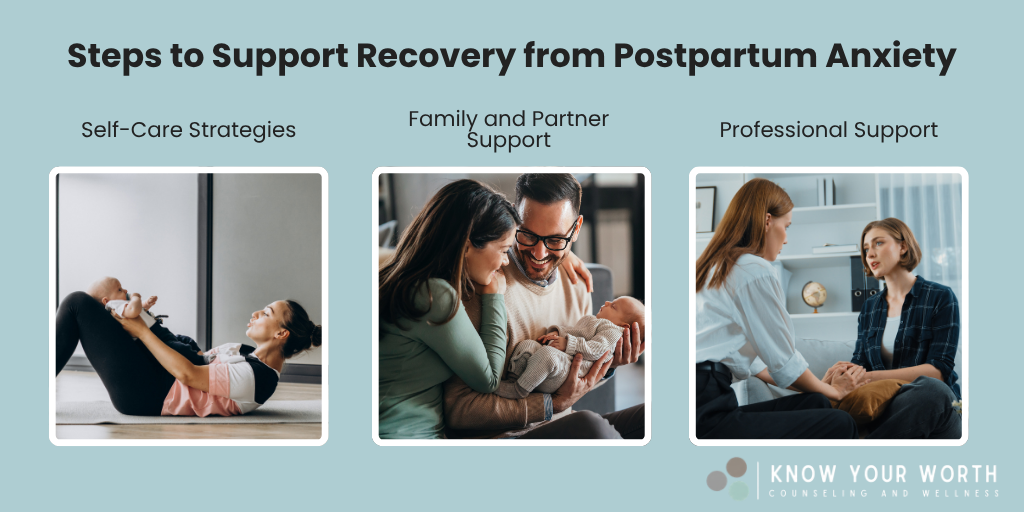
There are practical ways to support yourself while experiencing postpartum anxiety. These small steps can help you feel calmer and more balanced.
Self-Care Strategies:
Rest whenever possible, have enough sleep.
Eat regular meals to keep your energy up.
Spend time outside and get fresh air when you can.
Practice deep breathing or grounding exercises to calm your mind.
Family and Partner Support:
Ask for help with baby care, household tasks, or errands.
Share how you feel without fear of judgment.
Accept offers of help, even if it feels small.
Professional Support:
Counseling or therapy helps you process thoughts and feelings.
EMDR therapy or other trauma-informed approaches can be helpful if past experiences contribute to anxiety.
Medication management may be recommended in some cases, especially if anxiety is severe or persistent.
Combining self-care, family support, and professional help often leads to faster improvement and a stronger sense of control.
When to Seek Professional Help for Postpartum Anxiety
It’s important to reach out if postpartum anxiety is lasting longer than a few weeks or interfering with daily life. Some signs you should get help from a professional counselor include:
Panic attacks or sudden, intense fear.
Constant worry about your baby’s safety.
Feeling unable to function or enjoy daily activities.
Symptoms that worsen despite rest and support.
Early intervention can reduce anxiety more quickly and help you feel like yourself again. At Know Your Worth Counseling, we offer counseling services for mothers experiencing postpartum anxiety, including individual sessions, therapy for moms, and online support across Texas.
Final Thought
Postpartum anxiety is common and can affect any mother. The length of time it lasts varies, but with the right support, most mothers see improvement within weeks to months. Paying attention to your symptoms, using self-care, leaning on family, and seeking professional counseling can all help shorten the duration and bring back a sense of calm.
Remember, experiencing postpartum anxiety does not mean you are failing. It means your mind is adjusting to a big life change, and taking steps to get support shows strength. If you are struggling, you don’t have to face it alone. Help is available, and recovery is possible.
Support for Postpartum Anxiety
At Know Your Worth Counseling, we know that postpartum anxiety can feel exhausting, especially when the worry doesn’t slow down, and rest doesn’t feel restful. Our team is here to support mothers through this season with care, understanding, and practical help that fits your needs.
If you’re ready to take the next step, you can schedule a counseling session with one of our licensed counselors. You don’t have to go through postpartum anxiety alone.
FAQs
How long does postpartum anxiety usually last?
Postpartum anxiety can last anywhere from a few weeks to several months. The timeline depends on factors like stress levels, support systems, sleep, and whether professional help is received.
Can postpartum anxiety go away on its own?
For some mothers with mild symptoms, it may improve over time. However, many people need support like counseling or therapy to fully manage symptoms and feel better.
What makes postpartum anxiety last longer?
Lack of sleep, high stress, limited support, and a history of anxiety or depression can all make postpartum anxiety last longer if not addressed.
When should I worry about postpartum anxiety?
If anxiety continues for more than a few weeks, affects daily life, or causes constant worry or panic, it’s a good idea to reach out for professional support.
What helps shorten postpartum anxiety recovery time?
Early support, therapy, rest, healthy routines, and help from family or partners can all help reduce symptoms and support faster recovery.
