

What Happens in an EMDR Therapy Session

Starting therapy can feel overwhelming, especially if you are unsure what to expect. Many people ask, “What happens in an EMDR therapy session?” before beginning treatment. EMDR therapy helps people process trauma, anxiety, grief, and painful experiences in a safe and supportive environment. Sessions move at a comfortable pace, and you are never expected to share more than you feel ready to discuss.
In this blog, we will explain what happens during an EMDR therapy session, how the process works, and what you can expect before, during, and after treatment so you can feel more prepared and confident taking the next step toward healing.
What Is EMDR Therapy?
EMDR therapy stands for Eye Movement Desensitization and Reprocessing. It is a type of therapy that helps the brain process distressing memories in a healthier way.
Sometimes painful experiences can feel “stuck.” Even years later, certain memories, sounds, places, or situations may still trigger fear, anxiety, sadness, or emotional overwhelm. EMDR therapy helps reduce the emotional intensity connected to those experiences.
Unlike traditional talk therapy, EMDR therapy does not focus only on talking through problems for long periods of time. Instead, it helps your brain process memories through guided techniques like eye movements, tapping, or sounds.
Many people use EMDR therapy for:
Trauma and PTSD
Anxiety and panic attacks
Grief and loss
Stressful life events
Negative self-beliefs
Childhood experiences
Emotional triggers
EMDR therapy can help both teens and adults who feel stuck in painful emotions or memories.
The 8 Phases of EMDR Therapy You Can Expect
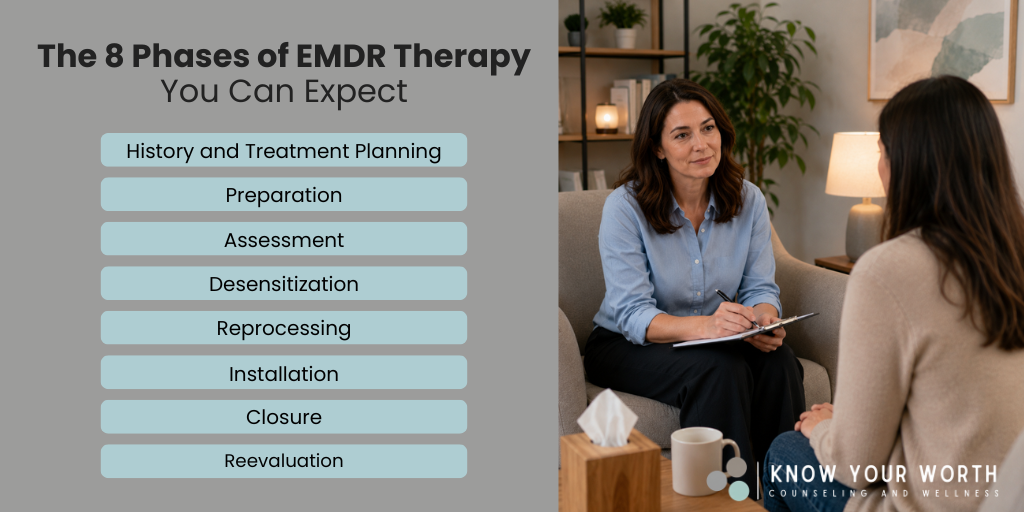
EMDR follows a structured eight-phase approach. While that may sound formal, the process is meant to support healing in a gradual and organized way.
Phase 1: History and Treatment Planning
Your certified emdr therapist gathers information about your background and identifies memories or experiences that may be contributing to emotional distress.
Together, you’ll discuss treatment goals and what you hope to work through in therapy.
Phase 2: Preparation
This phase focuses on helping you feel emotionally prepared.
Your therapist may teach:
Relaxation exercises
Breathing strategies
Ways to manage difficult emotions
This step helps create a sense of emotional safety before deeper processing begins.
Phase 3: Assessment
During this phase, you and your therapist identify a specific memory to focus on.
You may discuss:
Negative beliefs connected to the memory
Emotions linked to the experience
Physical sensations you notice in your body
Your therapist will also help you identify a healthier or more positive belief you want to build over time.
Phases 4 To 6: Desensitization, Reprocessing & Installation
This is the part most people think about when they hear the term EMDR.
During these phases, your therapist guides you through bilateral stimulation using eye movements, tapping, or sounds while you focus on the distressing memory.
As this happens, thoughts, emotions, or memories may come up naturally.
Over time, the brain begins processing the memory differently. Many people notice that the emotional intensity slowly decreases.
Some clients describe feeling relief, while others notice they can think about the experience without feeling overwhelmed.
Phase 7: Closure
At the end of each session, your therapist helps you return to a calm and grounded state.
You may review coping strategies or discuss ways to care for yourself after the session.
Even if processing is not fully complete, closure helps ensure you leave the session feeling emotionally supported.
Phase 8: Reevaluation
Future sessions often begin with checking in on progress.
Your therapist may ask:
How have you been feeling since the last session?
Has the emotional intensity changed?
Are there new thoughts or memories coming up?
This phase helps guide the next steps in treatment.
Who Can Benefit From EMDR Therapy?

EMDR therapy may benefit:
Teens and Adults struggling with anxiety or trauma and processing painful memories
People dealing with grief or loss
Individuals experiencing emotional triggers
Clients feel stuck after stressful life experiences
It can also help people who have tried other forms of counseling but still feel emotionally overwhelmed by certain memories or experiences.
Final Thought
If you have been wondering what happens in an EMDR therapy session, the process is meant to feel supportive, guided, and safe. EMDR therapy helps people process painful memories, reduce emotional distress, and build healthier beliefs about themselves over time.
Healing does not happen overnight, and you do not have to go through it alone. With the right support, an EMDR therapy session can become an important step toward emotional healing, self-worth, and lasting growth.
Find Support Through EMDR Therapy
At Know Your Worth Counseling, we provide compassionate virtual EMDR therapy for individuals across Texas dealing with trauma, anxiety, PTSD, grief, and emotional distress. Our team creates a safe and supportive environment where healing can happen at your own pace.
If you’re ready to learn more about EMDR therapy or begin counseling, schedule an appointment with our team today.
FAQs
What happens in an EMDR therapy session for the first time?
In your first EMDR therapy session, your therapist will focus on getting to know you, your concerns, and your goals. You may talk about stressful experiences and learn simple coping tools to help you feel safe and grounded before starting the EMDR process.
Do I have to talk about every detail during an EMDR therapy session?
No. You do not have to share every detail of your trauma. EMDR therapy focuses more on helping you process emotions and memories in a safe way, without forcing you to relive everything.
What happens in an EMDR therapy session when bilateral stimulation is used?
During an EMDR therapy session, bilateral stimulation may include eye movements, tapping, or side-to-side sounds. This helps your brain reprocess distressing memories so they feel less intense over time.
How does EMDR therapy help with anxiety and trauma?
EMDR therapy helps reduce the emotional impact of painful memories. Many people find that anxiety, trauma triggers, and negative thoughts become easier to manage after several EMDR therapy sessions.
How long does it take to see results from EMDR therapy?
Results vary for each person. Some notice changes after a few EMDR therapy sessions, while others need more time, depending on their history, symptoms, and goals.
