

How Long Does EMDR Take for Complex Trauma?

Healing from complex trauma is often a gradual process, and many people considering treatment want to know how long EMDR takes for complex trauma before beginning therapy. While EMDR can be highly effective, the timeline varies depending on factors such as the nature of the trauma, symptom severity, and individual treatment goals.
Unlike single-incident trauma, complex trauma often involves multiple distressing experiences that occurred over an extended period. Because of this, therapy may require additional preparation, stabilization, and processing sessions to ensure that healing happens at a safe and manageable pace.
In this guide, we’ll discuss how long EMDR takes for complex trauma, the factors that influence treatment length, and what you can expect throughout the different stages of the EMDR process.
How EMDR Works for Complex Trauma
EMDR for complex trauma helps the brain process memories that feel “stuck.” These memories often carry strong emotions like fear, shame, or sadness.
During EMDR trauma therapy, a trained therapist uses eye movements, tapping, or sounds.
This is called bilateral stimulation. While this happens, the person focuses on a memory with the therapist's support.
The goal is simple:
The memory stays in place
But the emotional charge becomes lighter
Over time, the brain learns that the memory belongs in the past. It no longer feels like it is happening in the present.
Typical Timeline for EMDR Therapy
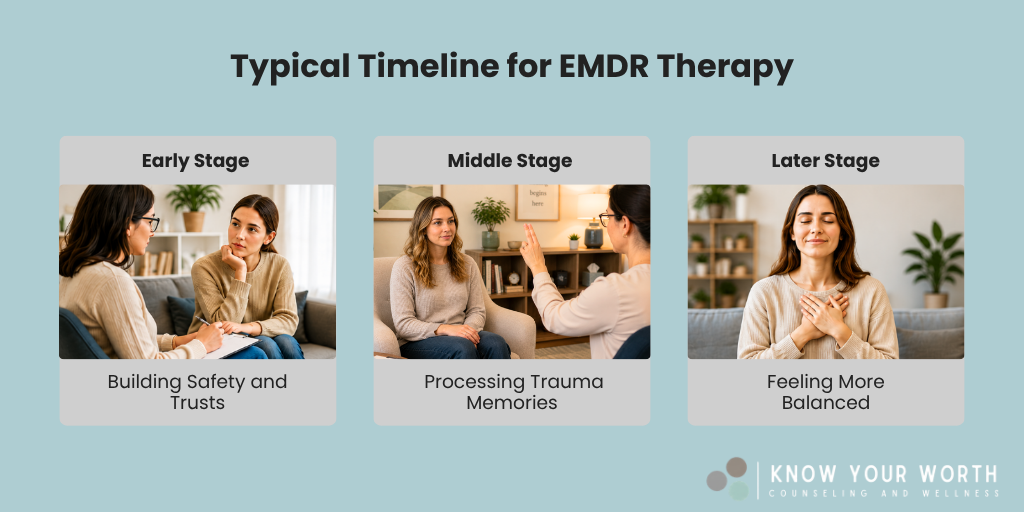
There is no single answer to how long EMDR takes for complex trauma. But most people move through similar stages. Healing happens step by step. Each stage plays a role in the emotional recovery process.
Early Stage: Building Safety and Trusts
This is usually the first phase of EMDR trauma therapy. In this stage, the focus is on safety, not processing trauma yet.
You can expect:
Talking about your background
Sharing current struggles
Building trust with your therapist
Learning grounding and calming tools
Identifying memories to work on later
This stage can take a few sessions or longer. It depends on how safe and stable a person feels. EMDR works best when the nervous system is calm enough to handle deeper work.
Middle Stage: Processing Trauma Memories
This is where the main work of EMDR for complex trauma begins.
During this phase:
Specific memories are chosen one at a time
Eye movements or tapping are used during focus on memories
Emotions may come up during or after sessions
Memories slowly start to feel less intense
Some sessions may feel emotional. Others may feel quiet or reflective. Both are normal. This stage often takes the most time because complex trauma involves many memories and emotional layers.
Later Stage: Feeling More Balanced
As therapy continues, changes often become easier to notice.
People may begin to:
Feel less triggered by past memories
React more calmly in stressful situations
Sleep better or feel less anxious
Think more clearly about past events
Feel more stable in daily life
This stage is about emotional balance. Life starts to feel less controlled by the past.
What Affects EMDR Progress and Timeline
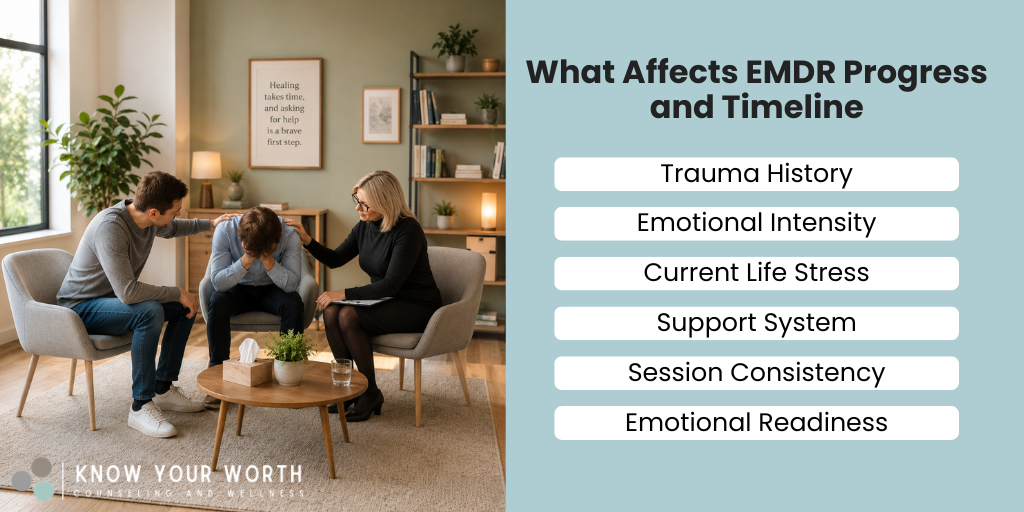
The answer to “how long does EMDR take for complex trauma” depends on many personal factors.
Here are the main ones:
Trauma History: Long-term or repeated trauma usually takes more time to process. The more memories involved, the longer therapy may take.
Emotional Intensity: If memories bring strong emotional reactions, therapy often moves more slowly at first. Safety always comes first in EMDR trauma therapy.
Current Life Stress: Ongoing stress can make it harder to focus on emotional processing. A stable environment often helps progress.
Support System: Support from friends, family, or trusted people can make a big difference. Feeling alone can slow down emotional healing.
Session Consistency: Regular sessions help maintain progress. Gaps in therapy can slow momentum.
Emotional Readiness: Everyone processes trauma at their own pace. EMDR is never rushed. The mind needs time to feel safe before going deeper.
What Progress Looks Like in EMDR
Progress in EMDR for complex trauma does not always feel dramatic at first. It often starts in small ways.
Signs may include:
Feeling calmer when thinking about the past
Less emotional reaction to triggers
Better sleep or fewer nightmares
Some people also notice changes in self-care habits
Feeling more present in daily life
Less tension in the body when recalling memories
Even small changes matter. They show that the brain is starting to process old experiences in a new way.
Why EMDR Can Feel Slow Sometimes
It is normal for EMDR trauma therapy to feel slow at times.
Here is why:
The brain processes memories in layers
Some sessions feel heavier than others
Emotional safety must stay in place
Healing does not move in a straight line
A slow pace does not mean nothing is happening. It often means the brain is working carefully through deep emotional material.
Is EMDR Effective for Complex Trauma?
Many people look into EMDR trauma therapy because they feel stuck in past experiences. Research and real-life experiences show it can help reduce trauma symptoms.
People often report:
Fewer emotional triggers
Less intense memories
Better emotional control
Feeling more grounded
EMDR for complex trauma works best with a trained therapist who understands trauma pacing and emotional safety.
Final Thought
If you have been wondering, ‘How long does EMDR take for complex trauma? ' The answer is that healing does not follow a fixed schedule. It unfolds step by step through EMDR trauma therapy, and each small shift matters more than speed.
Healing Happens at Your Own Pace
Healing from complex trauma is not a straight line. Some days feel lighter, while others bring up old emotions again. At Know Your Worth Counseling, we create space for you to move through your healing process in a way that feels steady, safe, and supported.
Reach out to us when you’re ready. Healing does not need to be rushed, and you don’t have to go through it alone.
FAQs
What is EMDR for complex trauma?
EMDR for complex trauma is a type of therapy that helps people process long-term or repeated painful experiences. It works by helping the brain reprocess stuck memories so they feel less intense over time.
How long does EMDR take for complex trauma?
There is no fixed timeline. Some people notice changes in a few months, while others need longer. The length depends on trauma history, emotional readiness, and consistency in therapy.
What happens during EMDR trauma therapy sessions?
Sessions usually involve talking with a therapist, focusing on specific memories, and using eye movements, tapping, or sounds. The goal is to reduce emotional distress linked to those memories.
Why does EMDR take longer for complex trauma?
Complex trauma involves many memories and deeper emotional layers. Because of this, therapy often moves step by step, starting with safety before deeper processing begins.
How do I know if EMDR is working?
You may notice fewer emotional triggers, calmer reactions to past memories, better sleep, and feel more grounded in daily life. Progress is often gradual, even if it feels small at first.
