

What Causes Miscarriage
Experiencing pregnancy loss can bring a lot of questions, especially around what causes miscarriage. Many people blame themselves after a miscarriage, but in most cases, it happens because of factors completely outside their control.
Miscarriage is more common than many people realize, with about 10% to 20% of known pregnancies ending in miscarriage, and it can happen even when someone is doing everything “right” during pregnancy. In many cases, miscarriage happens because the pregnancy is not developing as expected. Health conditions, hormone problems, age, lifestyle factors, and genetic issues can also play a role. Sometimes there is a clear explanation, while other times there is no exact answer at all.
In this blog, we’ll talk about what causes miscarriage, common risk factors, signs to watch for, and why emotional support matters after pregnancy loss.
What Is a Miscarriage?
A miscarriage is the loss of a pregnancy before 20 weeks. Most miscarriages happen during the first trimester, especially within the first 12 weeks of pregnancy.
Early miscarriages are often linked to problems with how the pregnancy develops. Later miscarriages are less common and may be connected to health conditions, infections, or problems with the uterus or cervix.
Many people are surprised by how common miscarriage is. Some pregnancies end before a person even realizes they are pregnant.
What Causes Miscarriage in Early Pregnancy?
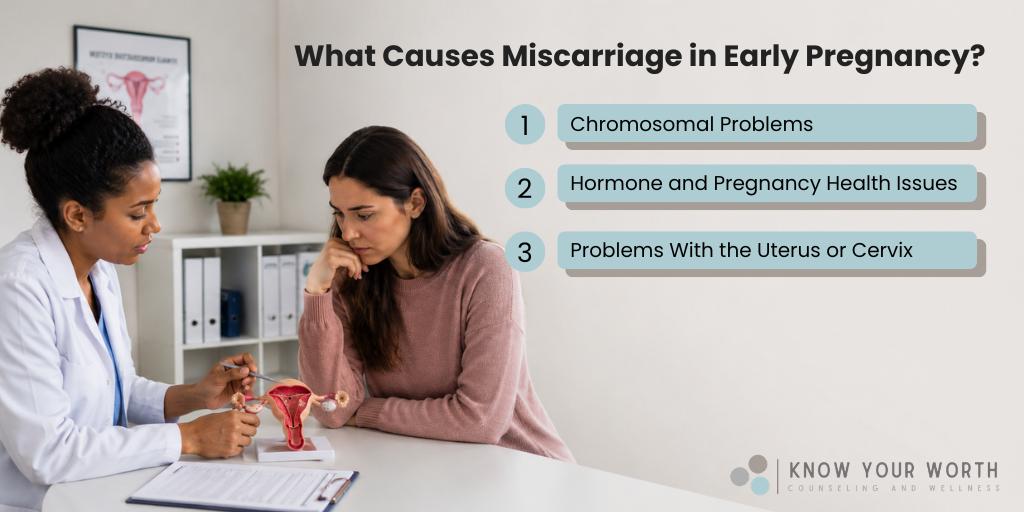
One of the biggest questions people ask is what causes miscarriage in the first few weeks of pregnancy. There are several possible reasons.
1. Chromosomal Problems
Chromosomal problems are the most common cause of early miscarriage. This happens when the baby receives an abnormal number of chromosomes during fertilization. When this happens, the pregnancy may stop developing properly. This type of miscarriage usually happens randomly and is not caused by something the parent did or did not do. For many people, this is a one-time event, and they later have healthy pregnancies.
2. Hormone and Pregnancy Health Issues
Hormones play a major role in supporting pregnancy. If hormone levels are too low or unbalanced, pregnancy may become harder to maintain.
Some health conditions linked to miscarriage include:
Thyroid disorders
Uncontrolled diabetes
Low progesterone levels
PCOS or hormone imbalance
Managing these conditions before or during pregnancy may help lower certain risks.
3. Problems With the Uterus or Cervix
The shape and condition of the uterus can sometimes affect pregnancy.
Some examples include:
Uterine abnormalities
Scar tissue inside the uterus
Certain fibroids
Weak cervix during pregnancy
These issues may affect how the pregnancy grows or how long it can safely continue.
Can Stress Cause a Miscarriage?
A lot of people worry that stress caused their miscarriage. This is one of the most common fears after pregnancy loss.
Normal daily stress usually does not directly cause miscarriage. Feeling emotional, overwhelmed, or anxious during pregnancy is common and does not mean you caused the loss.
However, severe physical stress, lack of sleep, poor eating habits, or unhealthy coping habits can affect overall health during pregnancy. That is why rest, emotional support, and proper care still matter. It is important to remember that most miscarriages happen because of medical or genetic reasons, not because someone felt stressed or upset.
Lifestyle Factors That May Increase Miscarriage Risk
Some lifestyle habits may increase the risk of miscarriage, especially during early pregnancy.
Smoking, Alcohol, and Drug Use
Smoking during pregnancy can affect oxygen and blood flow to the baby. Heavy alcohol and drug use may also affect pregnancy development and increase complications.
Poor Nutrition and Lack of Sleep
The body goes through major changes during pregnancy. Poor nutrition, exhaustion, and ongoing sleep problems can affect overall wellness and recovery. Getting enough rest and eating regular meals supports both physical and emotional health during pregnancy.
Exposure to Harmful Chemicals
Some workplaces or environments expose people to chemicals that may affect pregnancy. This can include certain cleaning products, pesticides, radiation, or toxic materials.
If someone is pregnant or trying to conceive, it may help to speak with a doctor about workplace safety concerns.
Medical Conditions Linked to Miscarriage
Some medical conditions are connected to a higher miscarriage risk.
These can include:
Autoimmune conditions
Blood clotting disorders
High blood pressure
Severe infections
Obesity-related pregnancy complications
Having one of these conditions does not guarantee miscarriage. Many people with health conditions still go on to have healthy pregnancies with proper medical care and support.
What Causes Recurrent Miscarriages?
Recurrent miscarriage usually means having two or more pregnancy losses in a row. This can feel especially painful and confusing. Doctors may recommend testing to look for possible causes.
Some possible reasons include:
Hormone imbalance
Genetic factors
Uterine problems
Autoimmune conditions
Blood clotting disorders
In some cases, doctors never find a clear reason. Even then, many people later have successful pregnancies. Repeated miscarriage can also affect emotional health in a major way. Fear, anxiety, and grief often stay present long after the physical recovery ends.
Signs of a Miscarriage
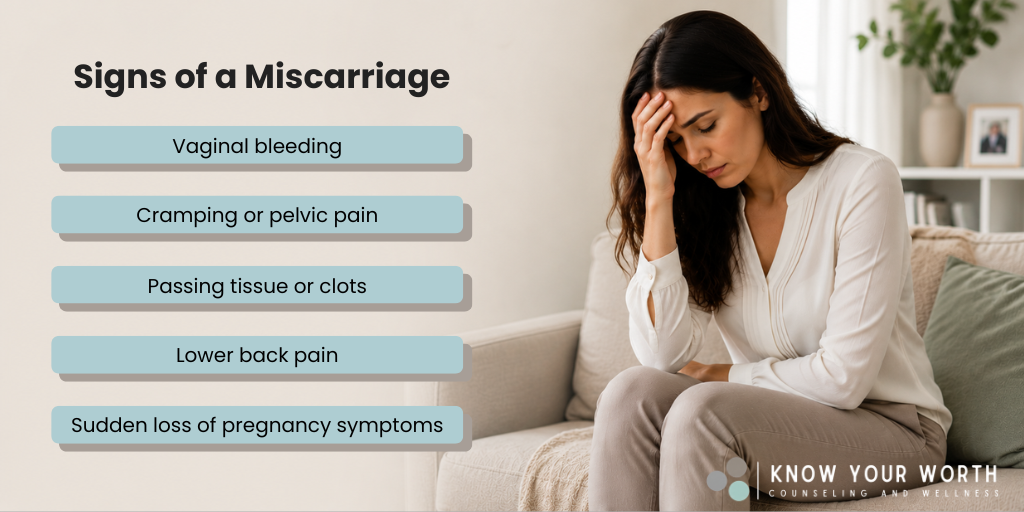
Symptoms of miscarriage can vary from person to person.
Some common signs include:
Vaginal bleeding
Cramping or pelvic pain
Passing tissue or clots
Lower back pain
Sudden loss of pregnancy symptoms
Light spotting during pregnancy does not always mean miscarriage. Some people experience bleeding and still continue with a healthy pregnancy. Still, it is important to contact a doctor if you notice heavy bleeding, severe pain, or unusual symptoms.
Professional Support After Pregnancy Loss
Support after a miscarriage can make a big difference emotionally. Some people find comfort through family or friends. Others benefit from speaking with a professional counselor who understands pregnancy loss and grief.
Professional counseling services may help with:
Processing miscarriage grief
Anxiety about future pregnancy
Fear after repeated pregnancy loss
Emotional overwhelm or sadness
Stress and relationship struggles after miscarriage
Having a safe place to talk openly can help people feel less alone during recovery.
Final Thought
So, what causes miscarriage? The answer is not always simple. In many cases, miscarriage happens because of chromosomal problems or medical factors outside someone’s control. Hormone issues, health conditions, lifestyle habits, and pregnancy complications can also play a role. If you’ve experienced pregnancy loss, it’s important to remember that healing takes time emotionally and physically. Asking questions about what causes miscarriage is completely normal, and support can help you process both the loss and the uncertainty that may come after it.
Support After Pregnancy Loss
Pregnancy loss can leave behind grief, fear, and emotional exhaustion that are hard to carry alone. At Know Your Worth Counseling, we offer a safe space to process your emotions, talk through your experience, and find support as you heal after a miscarriage.
Reach out to schedule a session when you feel ready.
FAQs
What causes miscarriage in most cases?
Most miscarriages happen because of chromosomal problems in the baby. This means the pregnancy does not develop properly from the start. In most situations, it happens by chance and is not caused by anything the parent did or did not do.
What habits can cause a miscarriage?
Certain habits can increase the risk of miscarriage, especially in early pregnancy. These include smoking, heavy alcohol use, drug use, poor nutrition, lack of sleep, and ongoing high stress without proper rest or care. Healthy daily habits can help support a safer pregnancy.
In what week do chromosomal abnormalities cause miscarriage?
Chromosomal abnormalities usually cause miscarriage during the first trimester, most often between weeks 5 and 10 of pregnancy. Many of these losses happen very early, sometimes before a person even realizes they are pregnant.
What medicines can cause miscarriages?
Some medicines are not safe during pregnancy and may increase the risk. These can include certain acne treatments, strong retinoids, some chemotherapy drugs, and specific medications for seizures or blood pressure. Always check with a healthcare provider before taking or stopping any medicine during pregnancy.
What percentage of miscarriages are caused by sperm?
Sperm-related factors, such as DNA damage or chromosomal issues, may contribute to some miscarriages. Research suggests male factors may be involved in about 20% to 30% of cases. However, most miscarriages are still linked to random chromosomal issues in the embryo itself.
